Social Good
Role
Tools
Figma
Microsoft Powerpoint
Adobe Illustrator
Maze
Design: Carla Reyas
Testing & Documentation: Taliya Lewis
Research: Kate Kelly
Raleigh Community Food Bank
Figma
Maze
User Research
Microsoft Office
Problem
Over 140,000 people in Wake County face food insecurity.
The organization needed better ways to turn visitors into active supporters.
Users needed clearer paths to volunteer, donate, or partner.
Objective
Design a simple, welcoming website that helps users understand the mission and take action quickly.
Overview
A UX design project focused on improving how users discover and engage with a local food bank by making it easier to become volunteers, donors, or community partners.
Overview
Research
Maria Green - 32
Wants to find local, flexible volunteer opportunities that work around her teaching schedule

David Chen - 47
Wants to support a local, trustworthy organization that uses donations wisely

Research included secondary data review and moderated usability testing.
Key Insights
Users trust real impact statistics
Clear pathways reduce hesitation
Simple navigation improves engagement
Strong messaging increases motivation
Research → Personas → Wireframes → Prototype → Testing → Iteration
Ideation
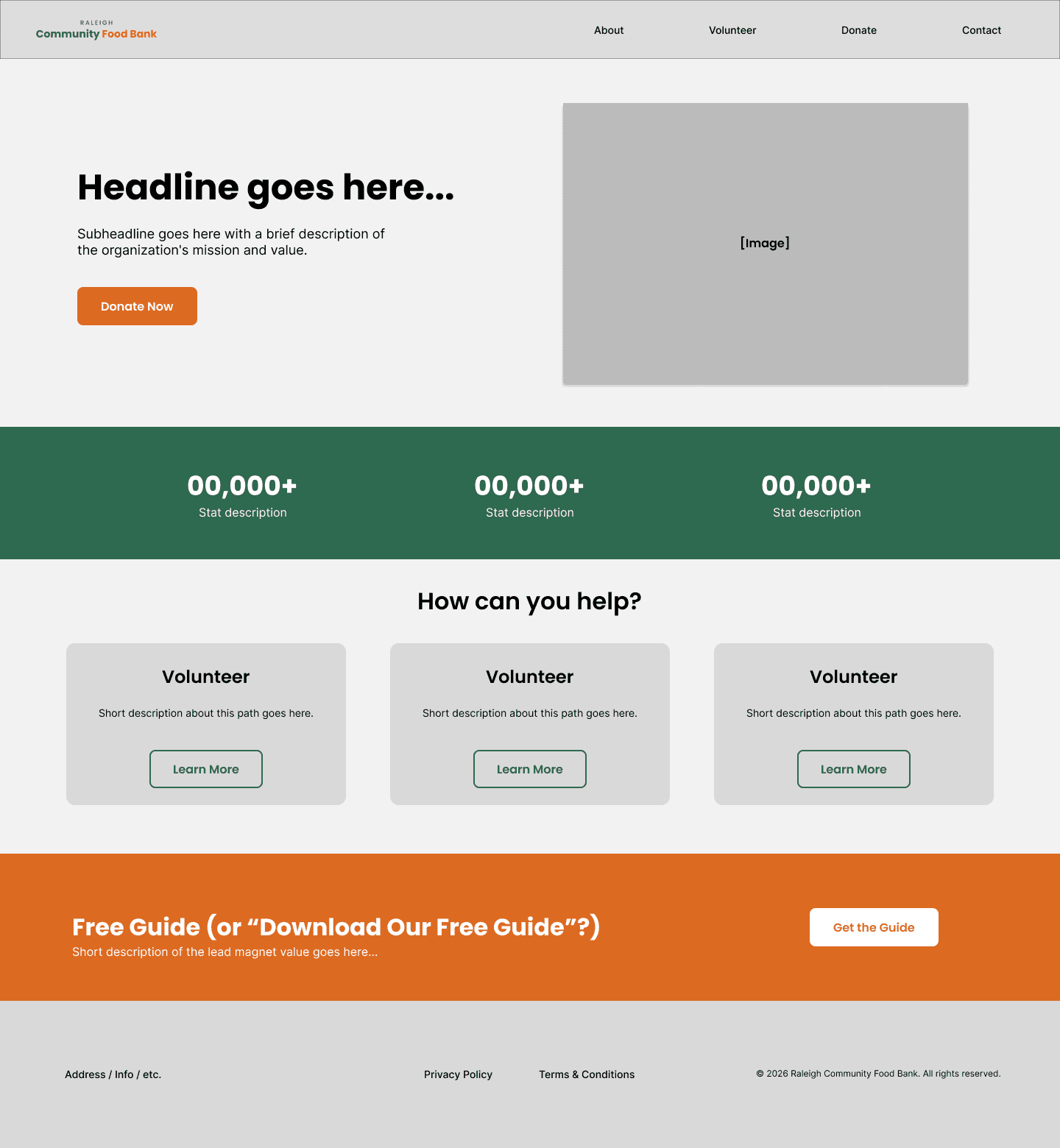
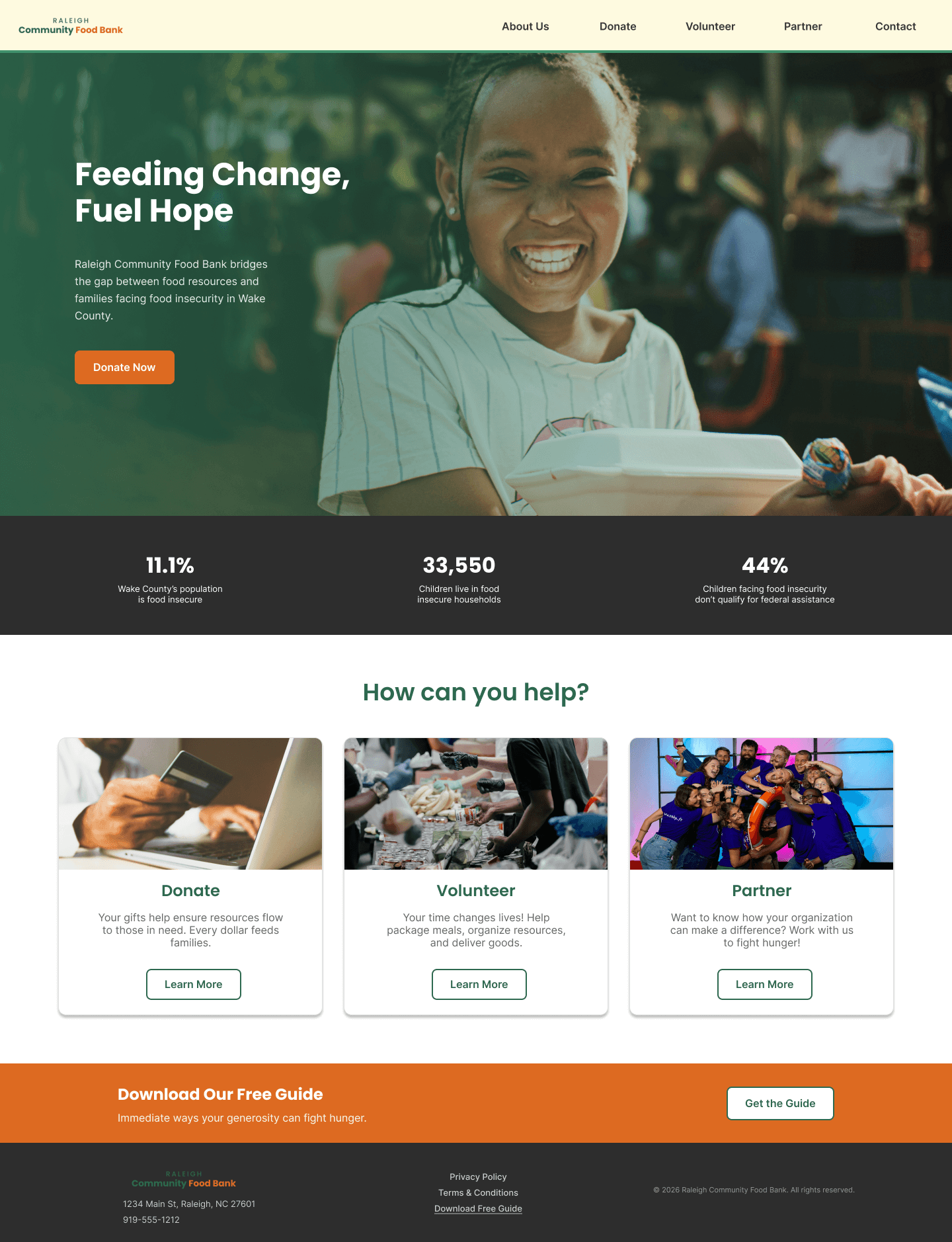
We designed a website experience that guides users toward meaningful action.
The final concept included:
Separate paths for volunteers, donors, and partners
Local impact stories and community statistics
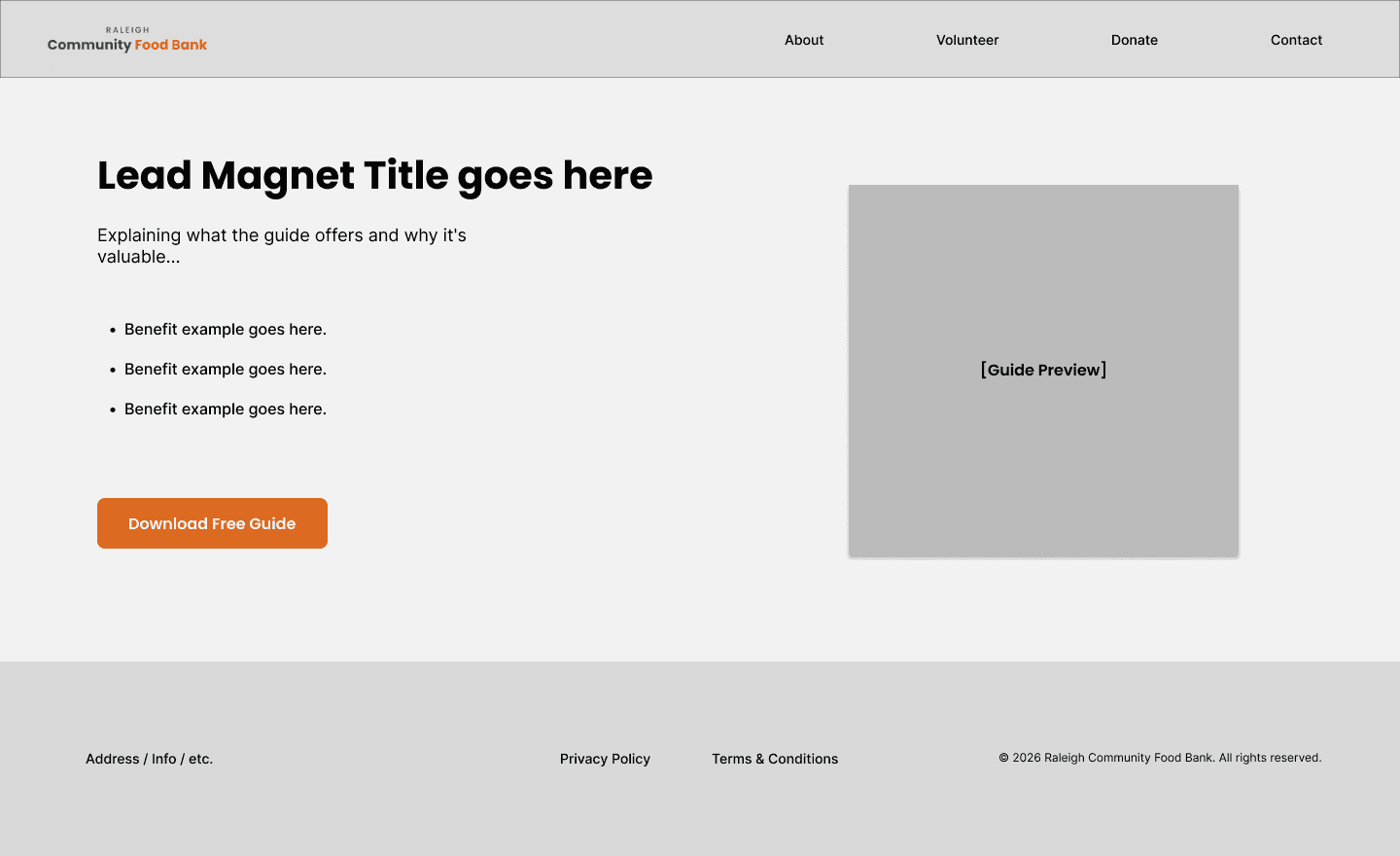
A free downloadable guide for engagement
User Testing and Iteration
Findings
Users completed core tasks successfully (Download the guide, explore volunteer, donor, and partner paths
CTAs were easy to find
Navigation needed small refinements
Moderated usability tests were conducted using key user tasks
Improvements Made
Improved menu clarity
Added hover states
Increased contrast
Enhanced imagery placement
Impact & Reflection
The final design improves clarity, trust, and engagement by making it easier for users to understand local food insecurity and take meaningful action.
The experience supports stronger conversion into volunteer sign-ups, donations, and community partnerships.
This project strengthened my understanding of how UX design can connect user needs with real-world social impact. It reinforced the importance of clarity, structure, and accessibility in designing for community-driven organizations.